Sun, Dec 14, 2025
The Beauty of Your Face
A powerful novel on identity, faith, and survival in contemporary America.
A Love Letter to Faith
How is it that the books that mean the most to us are often the hardest to write about?
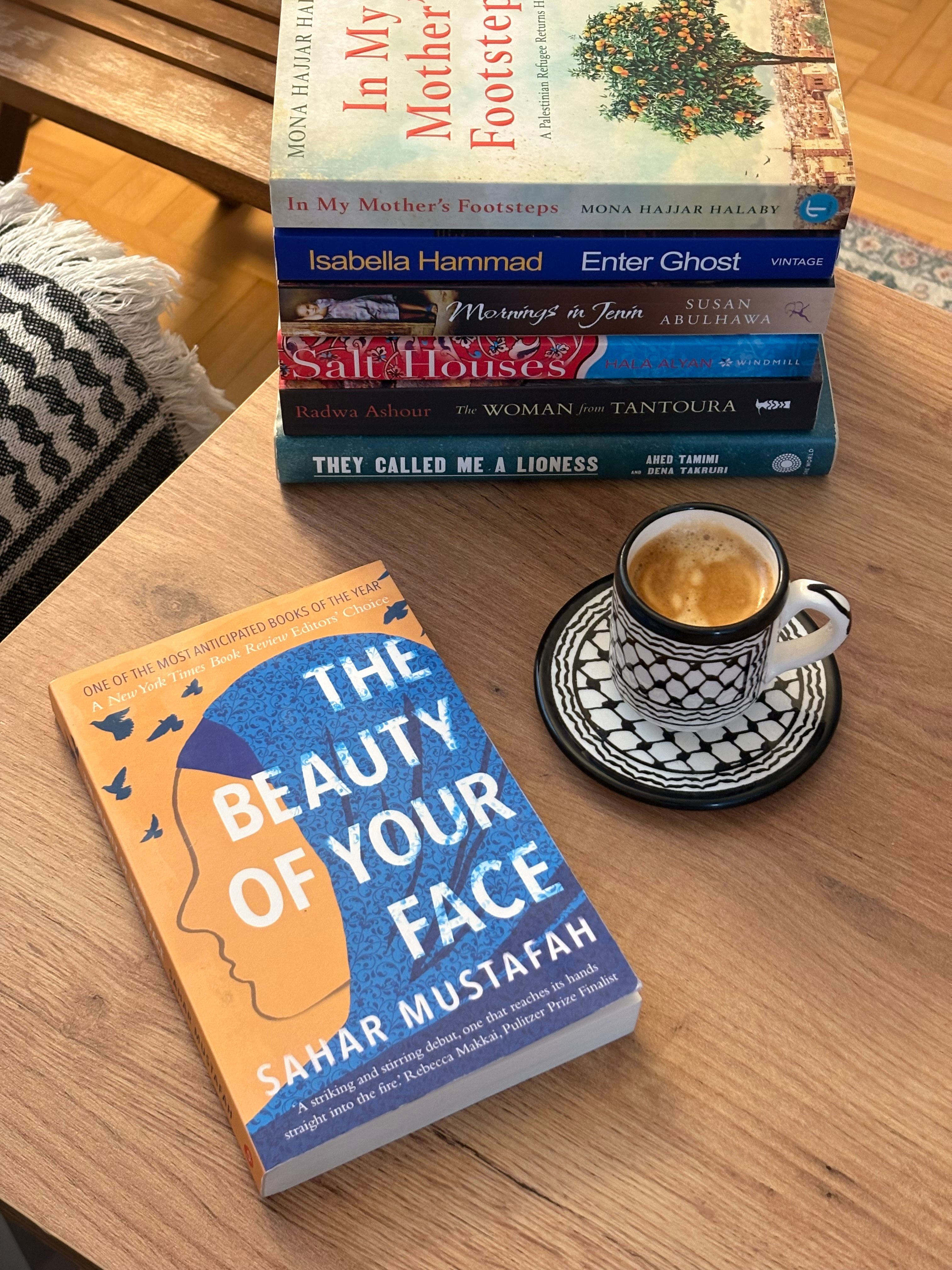
I’ve read The Beauty of Your Face by Sahar Mustafah twice so far, and both times it stayed with me in a different way. The first time, my heart genuinely fluttered when Bosnians were mentioned. I felt grateful that such a gifted author chose to include my small homeland, my people, who are so often forgotten in conversations about the broader Muslim world.
But this novel offers so much more than a few lines that felt personally meaningful to me. On my second read, I found myself able to appreciate the main story more deeply. At the center is Afaf Rahman: the daughter of a Palestinian immigrant and the principal of a Muslim girls’ school in a Chicago suburb. One morning, the school is attacked by a right-wing shooter. As Afaf witnesses the gunman’s movement through the building, her mind slips back into memories of her life.

But this novel offers so much more than a few lines that felt personally meaningful to me. On my second read, I found myself able to appreciate the main story more deeply. At the center is Afaf Rahman: the daughter of a Palestinian immigrant and the principal of a Muslim girls’ school in a Chicago suburb. One morning, the school is attacked by a right-wing shooter. As Afaf witnesses the gunman’s movement through the building, her mind slips back into memories of her life.
We quickly begin to understand what shaped her. Afaf comes from a dysfunctional family, marked by the disappearance of her older sister, an absence that fractures everything and creates a gulf between Afaf and her mother that never truly heals. Her mother’s grief is layered with another loss: the loss of homeland, which sits beneath so much of the story like a constant undertone.
What I loved most, and what I’ve always hoped to find more of in the books I read, is the way Afaf finds her way back to religion. I know some readers might criticize this choice, arguing that out of all the paths Afaf could have taken to pull herself out of the downward spiral, Mustafah chose a too-familiar one: rediscovering identity through faith. But for me, it felt real, heartwarming, and genuinely beautiful. It reflects how many people around the world return to their faith, not as an easy answer, but as a way of coming home to themselves.
I felt deeply grateful that the author chose this particular path for Afaf. I can picture a young girl, lost, uncertain, living in the West, facing bigotry and discrimination, coming across this book and feeling, for a moment, understood. Like being held. Like a warm hug.
Thank you, Sahar Mustafah, for bringing this book into the world.